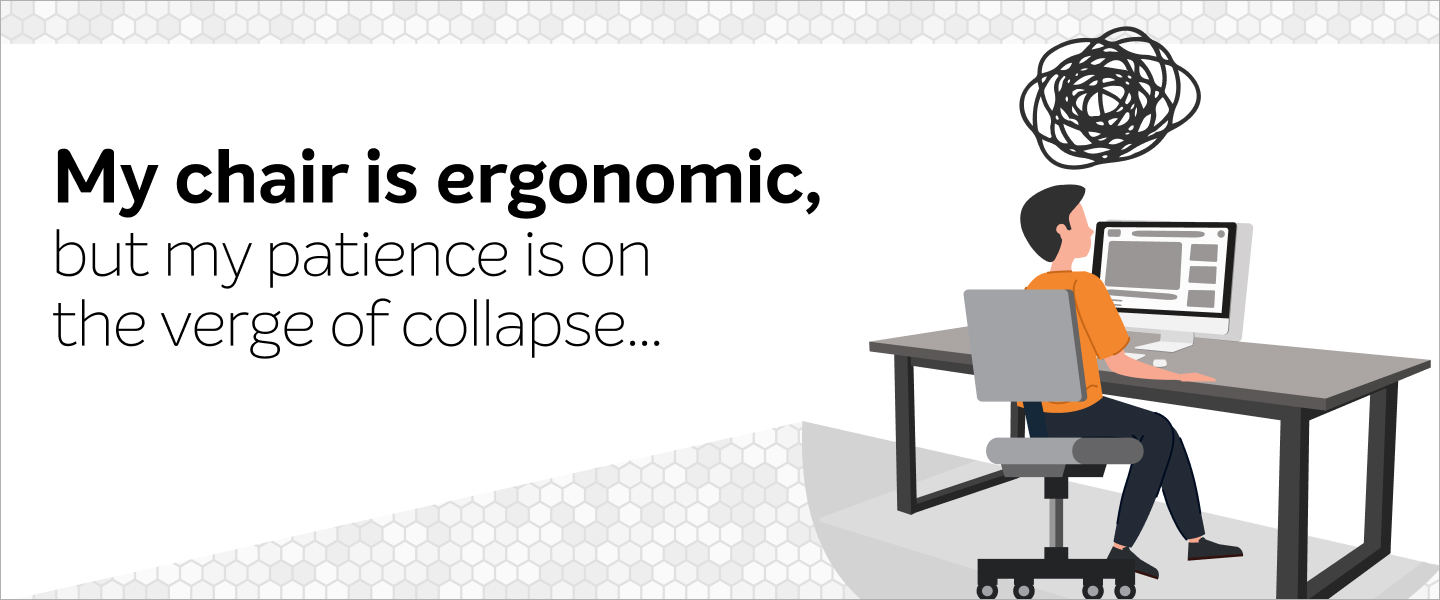
When was the last time you checked whether your office chair had five wheels? No, we haven’t gone crazy; it makes perfect sense in relation to what I’m about to tell you. Traditionally, Occupational Risk Prevention (ORP) focused on preventing physical harm: the classic trip on the stairs or back pain caused by poor posture. However, the digital environment in which we live has changed the rules of the game. We have moved from bruises caused by physical knocks to an invisible enemy that quietly slips into our minds through digital overload, a constant barrage of notifications, and our growing disconnection from reality.
The result is no longer a broken leg; it now manifests itself in the form of insomnia, technostress, and digital loneliness.
Digitalisation has brought fantastic tools and new ways of working, such as remote work, but it has also introduced conditions that can no longer be treated with a bandage and that, in many cases, we are not even aware of.
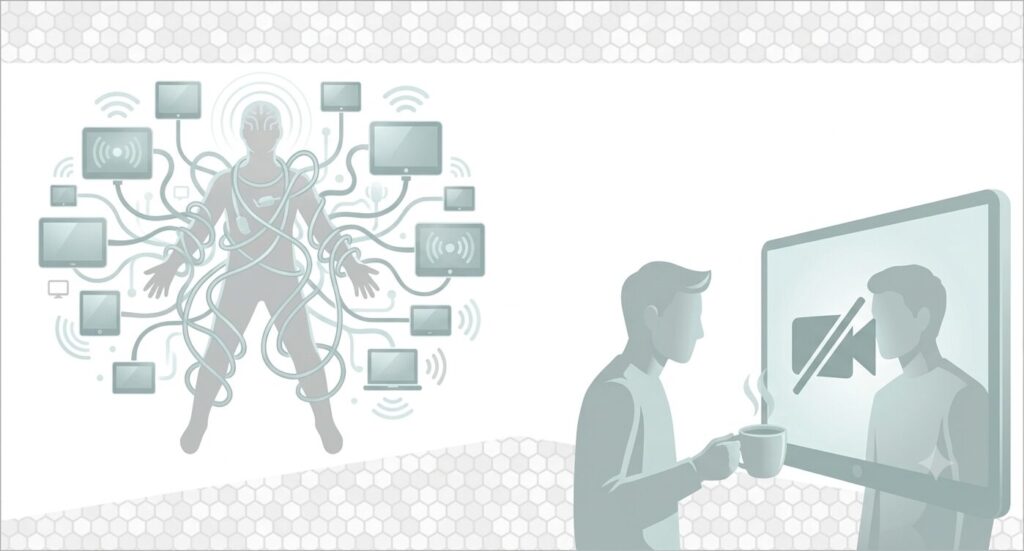
Do any of these situations sound familiar? You may be experiencing technostress, which occurs when technology takes control and you find yourself constantly attached to screens. A common example is replying to work emails on your phone while having dinner with your family because you feel you must be available 24/7.
You may also be suffering from burnout. You notice it when you spend hours sitting in front of a screen trying to draft a simple report that used to take you twenty minutes, but your mind is completely blocked and you are unable to concentrate. You feel a deep sense of apathy towards tasks that once motivated you and, at the end of the day, a constant feeling of frustration and inefficiency takes over. You feel as though you work extremely hard, yet nothing you do is enough or truly matters.
Or perhaps you are living in digital isolation, where human connection has almost completely disappeared. This is perfectly reflected when you no longer know what your new colleagues look like because coffee-break conversations have been replaced by video calls with cameras switched off and impersonal text chats.
These are changes that are completely transforming companies and our daily lives within them, often without us even realising it.
The numbers do not lie mental health is in the red
This is not merely a perception or a trend designed to fill Human Resources reports; it is the real picture of a workplace crisis in which the data is more alarming than any audit.
Official statistics currently show that what happens in our minds has a direct impact on our physical wellbeing, to the point that mental health disorders have firmly established themselves as the second leading cause of sick leave in Spain. This issue accounts for 17.86% of all lost working days and is second only to musculoskeletal disorders, which remain the primary cause of workplace absence.
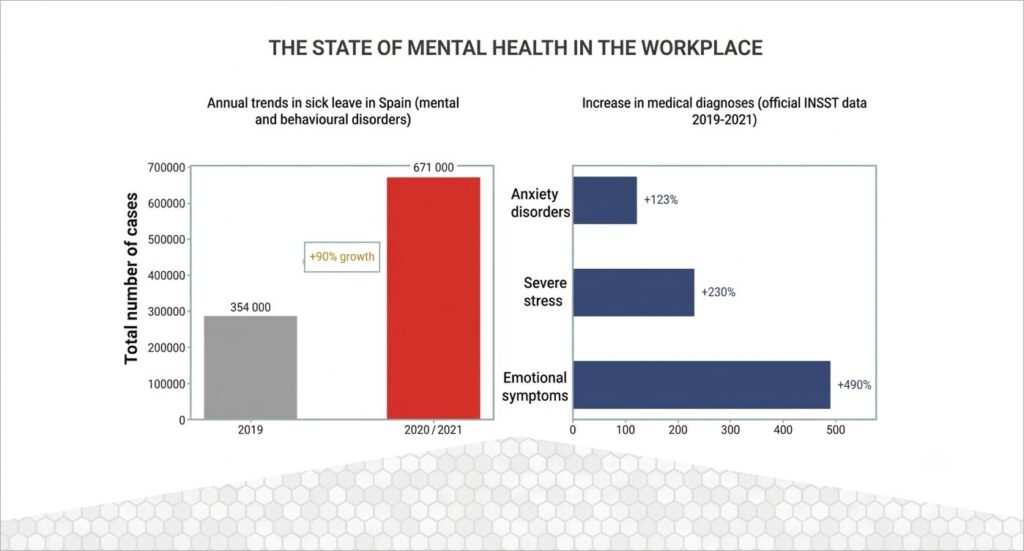
We have reached a historic record of nearly 671,618 annual health-related sick leave cases, representing an increase of more than 136% over the last decade compared with 2016. (UGT data, 2025)
This dramatic rise in anxiety is reflected in data from the National Institute for Safety and Health at Work (INSST), which reveals that diagnoses related to severe stress have increased by 230% and anxiety-related diagnoses by 120%. The institute also warns that sick leave linked to emotional symptoms has surged by almost 490% in recent years. (Official figures published by the INSST, 2018–2024 period)
Interestingly, this increase has been shown to affect the so-called “Burned-Out Generation” disproportionately, consisting of Generation Z and young professionals aged between 25 and 35. According to the UGT Occupational Health Report, they record significantly higher rates of anxiety-related absenteeism than any other age group.
To make matters worse, recovery is exasperatingly slow, as mental health-related cases require an average recovery period of 167.9 days. The outlook is, to say the least, concerning.
In terms of costs, data indicates that the absenteeism rate closed 2025 at a historic high of 7.68% of all contractually agreed working hours, confirming the upward trend that began in the previous decade, when temporary incapacity stood at 2.9% in 2014. This situation represents an economic impact that now exceeds €33 billion annually in Spain. If you are interested in exploring this topic further, these two articles are highly recommended.
Beyond the numbers, the conclusion is clear: the workplace environment is changing. Mental health has evolved from being a secondary concern into a real and essential requirement for the effective functioning of any organization.
Achieving this balance requires a joint effort. On the one hand, companies have a responsibility to create more human-centered workplaces, fostering healthier working environments that reduce exhaustion and psychosocial risks. On the other hand, we as employees must recognize the importance of taking breaks, disconnecting, and prioritizing our own wellbeing in our daily lives.
Because yes, it is important to worry about whether our chair has five wheels… but perhaps we should pay a little more attention to what is happening inside our minds.
The figures speak for themselves: mental health is no longer a “modern” trend in occupational risk prevention but a genuine necessity if organisations and the people who make them possible are to continue functioning effectively.
The good news is that every small action counts. Taking care of yourself also means taking care of your team, your work, and your future.
Do we have a deal?